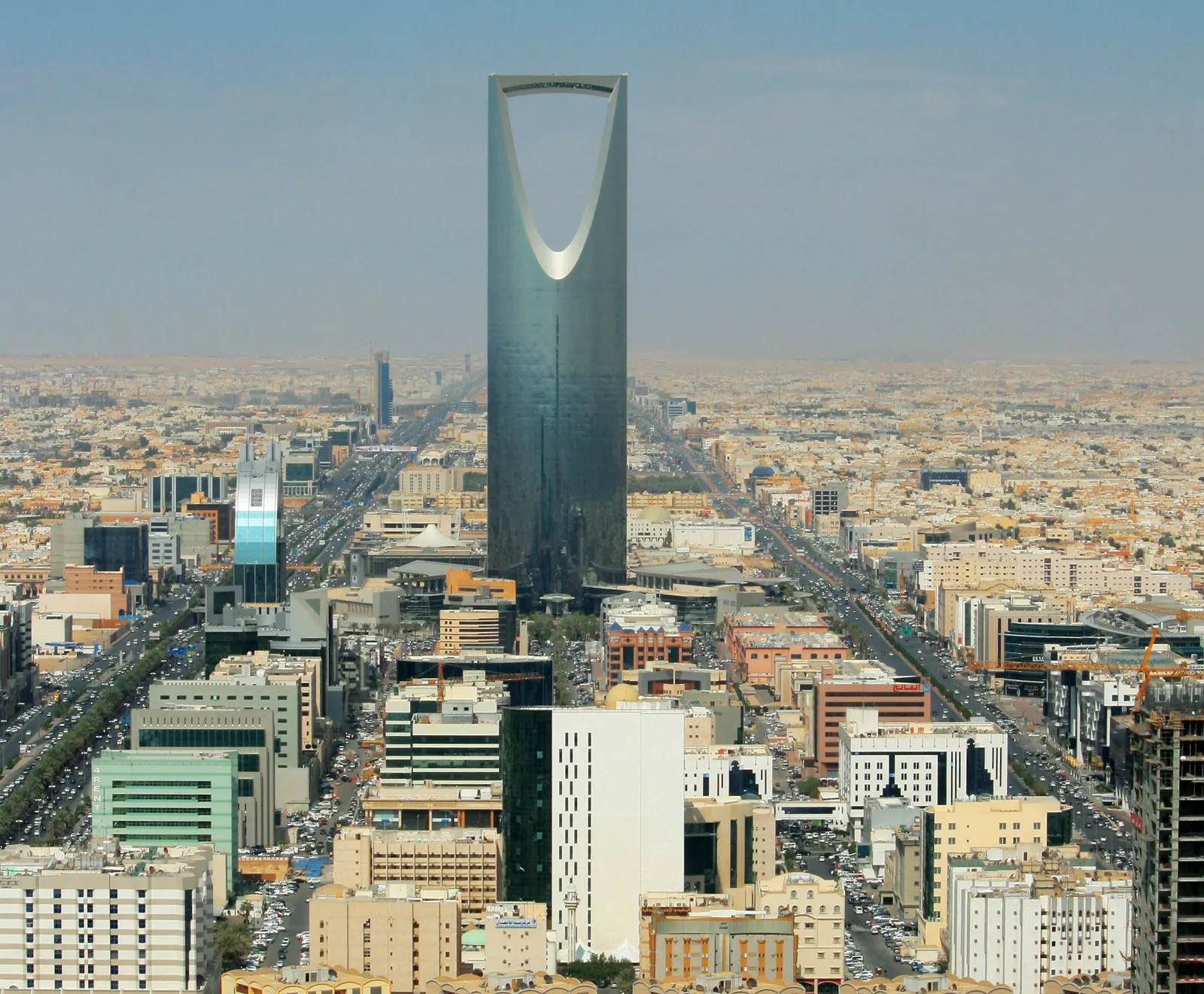
Let's get one thing out of the way: the Riyadh you Googled three years ago doesn't exist anymore.
Entire new districts have been delivered. A metro system that was "almost done" for the better part of a decade is finally reshaping commute times and, with them, which neighborhoods are worth your money. Population growth is running at roughly 3.5 percent a year, Vision 2030 mega-projects are pulling in six-figure hires by the thousands, and a rent freeze that kicked in September 2025 has created a rare window where locking in a lease today could save you serious cash over the next half-decade.
This is not one of those "Top 10 Areas" lists you skim and forget. This is a neighborhood-by-neighborhood playbook rent ranges, neighborhood character, commute math, and the kind of on-the-ground perspective that only comes from watching Riyadh's rental market every single day. Whether you're a fresh graduate hunting a studio in Al Olaya or a family of five weighing villas in Al Malqa against compounds in Hittin, you'll walk away knowing exactly where your riyals go furthest.
Why Riyadh's Rental Map Is Being Redrawn
Five forces are reshaping the city's rental geography all at once, and if you don't understand them, you'll either overpay or end up in a neighborhood that doesn't match your life.
Vision 2030 mega-projects are the biggest catalyst. NEOM grabs the headlines, but for day-to-day Riyadh renters, it's the King Abdullah Financial District (KAFD) in the north, the Diriyah Gate cultural quarter to the west, and the Sports Boulevard running through the city's spine that matter most. These projects don't just create jobs, they create gravity. Restaurants, clinics, coworking spaces, and international schools cluster around them, and rental demand follows. Neighborhoods within a fifteen-minute drive of KAFD have seen asking rents climb 18 to 25 percent since 2023.
Then there's the population boom. Riyadh is on track to house ten million people by 2030, up from roughly eight million today. The Royal Commission for Riyadh is explicit about this target, and the infrastructure spend to support it, roads, utilities, public transit, is already in the ground. More people means more demand for housing, and supply, while growing, has not kept pace. Vacancy rates in the northern premium corridor sit below four percent.
The Riyadh Metro changed everything when it opened its first full operating lines. Six lines, eighty-five stations, and suddenly neighborhoods that felt remote are twenty minutes from the business core. Al Narjis and Al Arid, once considered "too far north," now have metro access that makes a commute to Al Olaya competitive with driving from Al Rawdah in rush-hour traffic. If you're picking a neighborhood in 2026 and you're not checking metro proximity, you're leaving value on the table.
The rent freeze arguably the single most tenant-friendly regulation in the Gulf deserves its own section (and it gets one below), but the headline is this: lease renewals cannot increase rent for five years from September 2025. That means a lease you sign today locks in your rate through 2030. In a market where rents have been climbing seven to twelve percent annually in desirable areas, the math is staggering.
Finally, there's new housing supply tilting toward the north and northeast. Developers are delivering thousands of apartment units in Al Yasmin, Al Narjis, and Al Arid — modern builds with amenities that older central stock can't match. This is pulling young families away from traditional strongholds like Al Rawdah and Al Rabwah, creating a two-speed market: shiny new periphery versus convenient but aging center. Both have merits. The key is knowing which trade-off suits you.
Types of Rental Properties in Riyadh
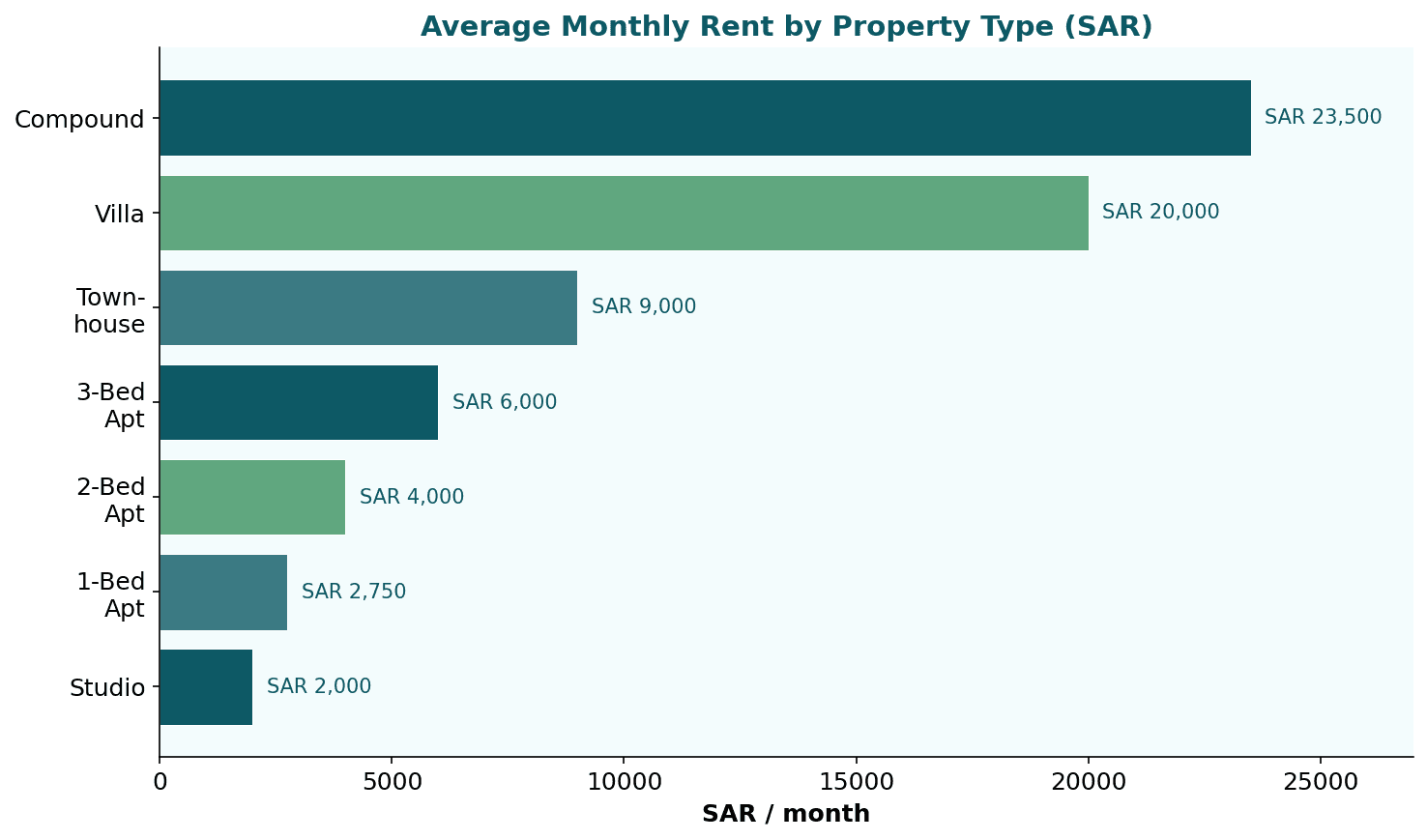
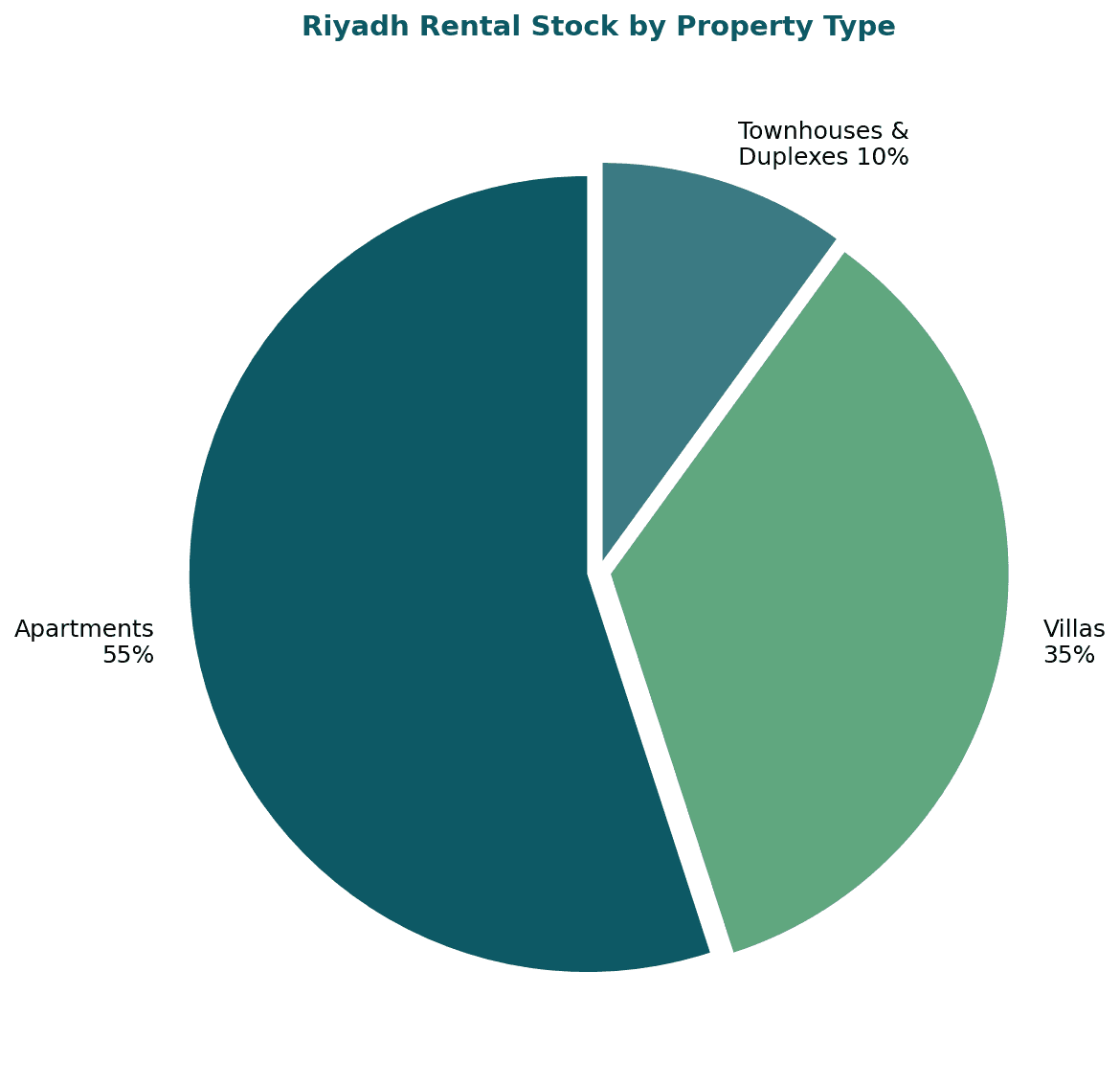
Before we zoom into neighborhoods, it helps to understand what's actually on the market. Riyadh's rental stock breaks down into roughly 55 percent apartments, 35 percent villas, and 10 percent townhouses and duplexes though those ratios are shifting as developers push more mid-rise apartment projects to meet Vision 2030 density targets.
Studios are the entry point, typically running SAR 1,500 to 2,500 a month. You'll find them concentrated in the central business districts — Al Olaya, Al Wurud, Al Sulaimaniyah — and increasingly in the emerging northern suburbs where new buildings include smaller units to capture demand from young professionals, interns, and fresh graduates. A studio in Al Olaya starts around SAR 2,000 a month, roughly what you'd spend on dining out if you eat well. The trade-off is space: most clock in at 35 to 50 square meters, so you're paying for location and walkability, not room to stretch.
One-bedroom apartments occupy the SAR 2,000 to 3,500 range and are the workhorse of Riyadh's rental market. Singles who've outgrown studio life and couples without kids gravitate here. In the central business corridor, expect to pay toward the top of that range for a well-maintained unit with parking. In emerging northern areas like Al Yasmin, the same budget gets you a newer build, better finishes, and maybe a balcony but you'll add fifteen minutes to your commute.
Two- and three-bedroom apartments serve the broadest demographic. A two-bedroom runs SAR 3,000 to 5,000 a month and suits small families or friends splitting costs. Three-bedrooms range from SAR 4,500 to 7,500 and are the default for families with school-age children. Location is everything in these segments: a three-bedroom in Al Malqa might fetch SAR 7,500 while a comparable-sized unit in Al Naseem goes for SAR 3,500. The difference is finishes, compound amenities, and proximity to international schools.
Villas are where the numbers jump. Expect SAR 10,000 to north of 30,000 a month depending on size, age, and neighborhood. Stand-alone villas appeal to large Saudi families and senior executives who need space — we're talking 300 to 600 square meters with a private garden, driver's quarters, and often a separate majlis. In premium northern neighborhoods like Hittin, modern villas with private pools start around SAR 25,000. In eastern areas like Al Rawdah, older but spacious villas can be found for SAR 12,000 to 15,000.
Compound units are the expat staple, priced at SAR 12,000 to 35,000 a month. Compounds offer a self-contained ecosystem — swimming pools, gyms, playgrounds, sometimes international grocery stores and clinics on-site. Diplomatic families, corporate relocations, and expats who want a plug-and-play lifestyle gravitate here. The highest-end compounds in the Diplomatic Quarter and northern Riyadh rival five-star resort living, with price tags to match.
Townhouses and duplexes slot into the SAR 6,000 to 12,000 range and represent the middle ground between apartment convenience and villa space. They're popular with families who want a private entrance, a small yard, and two floors of living space without the maintenance burden of a full villa. Supply is growing in the northern emerging districts, where developers are building entire townhouse communities with shared parks and retail strips.
Neighborhood-by-Neighborhood Breakdown
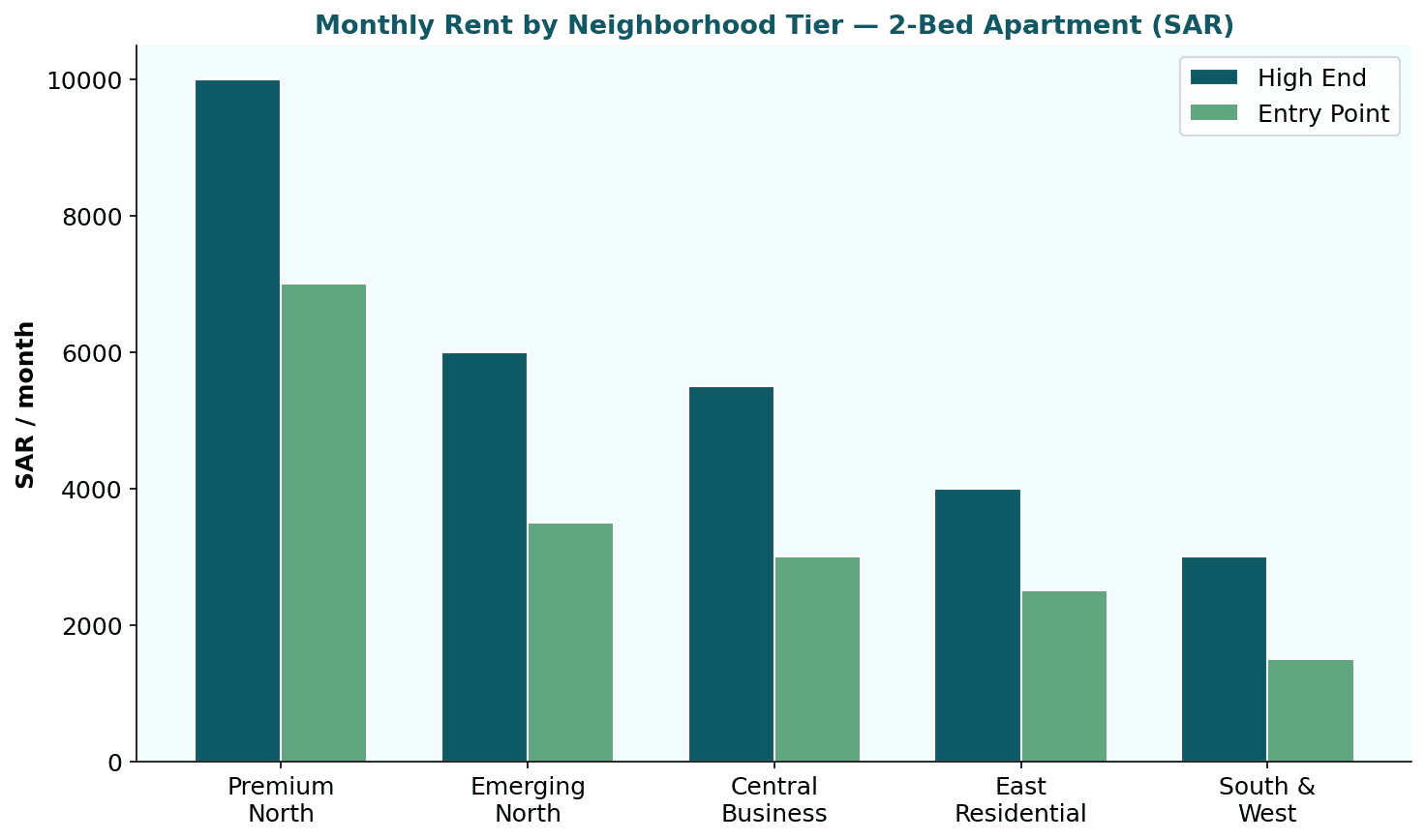
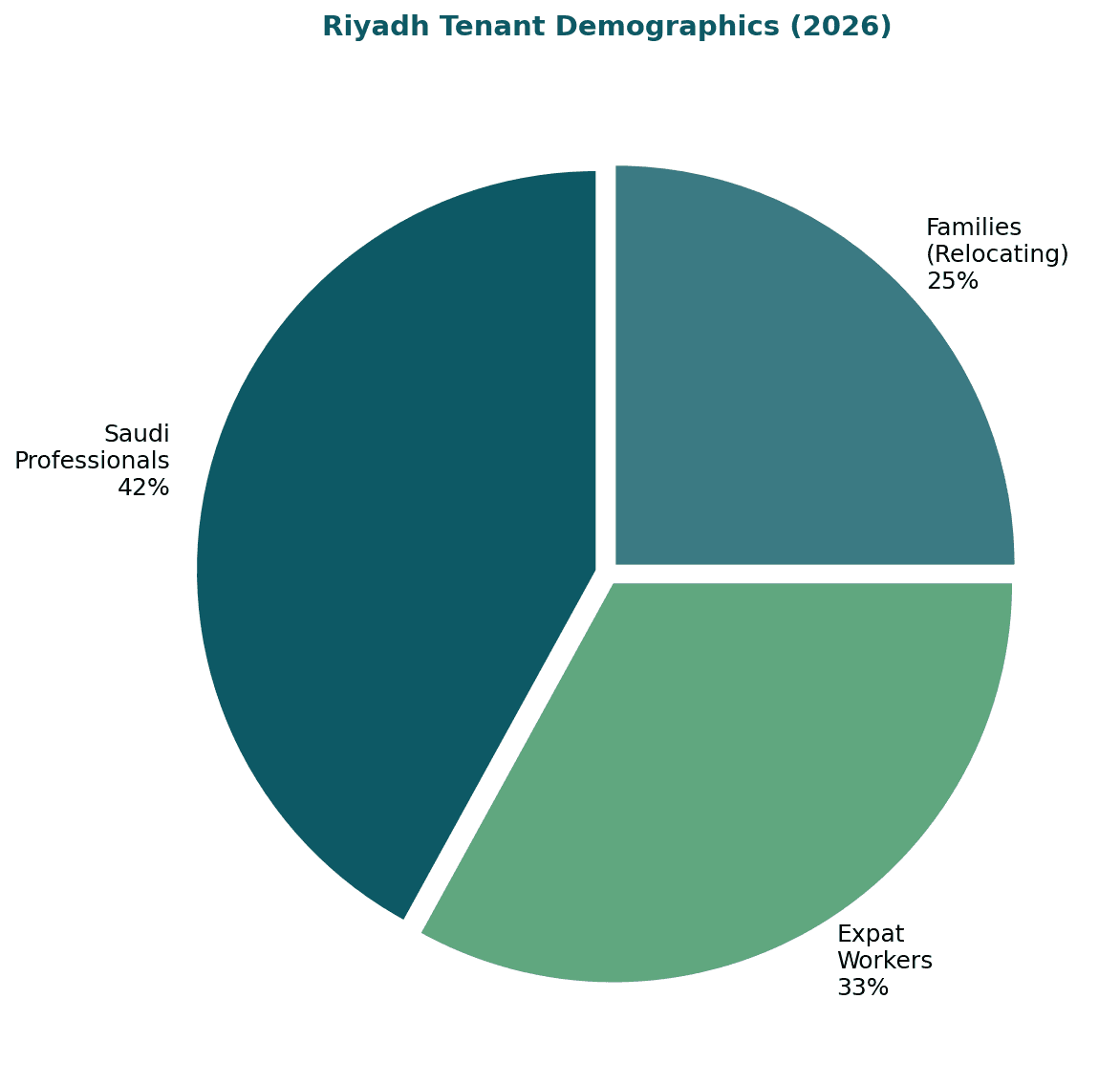
Here's where we get specific. Riyadh's rental landscape divides naturally into five tiers based on geography, price, and character. We'll walk through each.
Premium North: Al Malqa, Hittin, Al Nakheel, Al Aqiq
This is Riyadh's platinum postcode — the neighborhoods where embassies, C-suite expats, and well-heeled Saudi families converge. A two-bedroom apartment here starts at SAR 7,000 and pushes well past 10,000 for newer buildings with views. Villas regularly command SAR 20,000 to 35,000.
Al Malqa feels like Riyadh's answer to a planned suburban utopia: wide boulevards, manicured landscaping, and a quiet that belies its proximity to the city's commercial engine. It sits minutes from KAFD, which means your morning commute might be shorter than the walk to your mailbox in some sprawling compounds. International schools — British, American, French curricula — dot the area, making it a magnet for families on corporate packages. The unique insight here is timing: Al Malqa's villa stock is aging, and landlords of older properties are getting competitive on rent to retain tenants who might otherwise jump to a sleek new Hittin build. If you're willing to trade cutting-edge finishes for an extra bedroom at the same price, Al Malqa rewards negotiation.
Hittin is the newer, flashier sibling. Development here has been aggressive over the past five years, and it shows — glass-fronted apartment towers, boutique retail, specialty coffee on every corner. It's where Riyadh's young-money professionals want to be seen, but it also has genuine substance: excellent road connectivity, direct access to King Fahd Road, and a growing restaurant scene that rivals Al Olaya. Two-bedroom apartments average SAR 8,000 to 10,000. The catch? Hittin's popularity means vacancies are razor-thin. When a good unit hits the market, it's gone in days.
Al Nakheel is quieter and more residential than Hittin, with a reputation as one of Riyadh's most family-friendly premium neighborhoods. Tree-lined streets, proximity to Granada Mall and Nakheel Mall, and a community feel that newer developments can't manufacture overnight. Rents sit at the lower end of the premium tier — a two-bedroom here might go for SAR 7,000 to 8,500 — making it the value play within the platinum bracket.
Al Aqiq bridges the premium north and the emerging north. It's home to KAFD itself, which means foot-traffic energy during the workweek and a more urban feel than its residential neighbors. Studios and one-bedrooms in Al Aqiq attract young professionals who want to walk to work in the financial district. Expect SAR 3,000 to 4,500 for a one-bedroom, which is premium pricing for that unit type but makes sense when you factor in zero commute costs and the lifestyle dividend of living in Riyadh's most forward-looking urban precinct.
Best for: Executives, diplomats, dual-income families, anyone prioritizing proximity to KAFD and international schools.
Emerging North: Al Yasmin, Al Narjis, Al Arid, Qurtubah
If the premium north is where established money lives, the emerging north is where smart money is moving. Two-bedroom apartments here range from SAR 3,500 to 6,000 — roughly half the premium north — and the quality gap is narrowing fast. New construction dominates, buildings come with gyms and underground parking as standard, and the Riyadh Metro has collapsed commute times to the business core.
Al Yasmin is the star of this tier. It's undergone a transformation over the past three years, evolving from a quiet residential suburb into a vibrant mixed-use neighborhood with cafes, coworking spaces, and weekend brunch spots. Families love it for the newer school options and generous apartment sizes. A three-bedroom here goes for SAR 5,000 to 6,500 — the kind of money that gets you a cramped two-bedroom in Hittin. The metro connection seals the deal: Al Yasmin to Al Olaya is a twenty-five-minute ride without touching a steering wheel.
Al Narjis sits further north and offers Riyadh's best price-to-newness ratio. Nearly everything here was built in the last five years. Two-bedroom apartments average SAR 3,500 to 4,500, and the finishes — quartz countertops, smart-home wiring, double-glazed windows — would cost you SAR 7,000-plus in the premium corridor. The trade-off is distance: Al Narjis is still a 35-to-40-minute drive from central Riyadh in peak traffic, though the metro mitigates this significantly. If you work remotely or have flexible hours, this is arguably Riyadh's best-value neighborhood in 2026.
Al Arid is Al Narjis's neighbor to the east and shares its new-build character, though it's slightly less developed in terms of retail and dining. Rents are a touch lower — SAR 3,000 to 4,000 for a two-bedroom — and the community is heavily Saudi families who prioritize space and modernity over nightlife proximity. The unique draw here is land: some Al Arid developments include townhouses with private gardens at SAR 7,000 to 9,000, a format that barely exists in central Riyadh at any price.
Qurtubah is the wildcard — technically in the northeast, not the north, and with a character that blends old Riyadh with new. Parts of Qurtubah have mature tree-lined streets and a settled feel, while newer sections feature modern apartment blocks. A two-bedroom averages SAR 3,500 to 5,000. Its location is the selling point: close to the airport, well-connected to both the northern premium corridor and the eastern residential belt. For professionals who travel frequently, Qurtubah's airport proximity saves hours of cumulative commute time every month.
Best for: Young families, mid-career professionals, remote workers, anyone who wants new builds without premium-north pricing.
Central Business: Al Olaya, Al Wurud, Al Sulaimaniyah
This is Riyadh's beating commercial heart — the strip of neighborhoods running along King Fahd Road and Olaya Street where towers gleam, traffic hums, and you can walk to a meeting, grab shawarma, and be at a coworking space without ever starting a car. One-bedroom apartments here range from SAR 2,500 to 4,500, and the premium is entirely for convenience.
Al Olaya is synonymous with Riyadh's business identity. Kingdom Tower, Faisaliah Tower, and the Al Olaya strip define the skyline, and the ground-level energy is as close to a walkable urban core as Riyadh gets. Studios start around SAR 2,000, one-bedrooms around SAR 3,000 to 4,500, and two-bedrooms push SAR 4,000 to 6,000. The stock is older than northern neighborhoods — many buildings date to the 2000s and early 2010s — but maintenance standards vary widely, so inspect before you sign. Al Olaya's unique advantage is optionality: restaurants, clinics, banks, gyms, and government offices are all within walking distance, which means your effective cost of living (transport, time, convenience) can be lower than a cheaper suburb where you drive everywhere.
Al Wurud flanks Al Olaya to the west and offers a slightly more residential feel at slightly lower rents. One-bedrooms go for SAR 2,500 to 3,500, and the neighborhood has a loyal tenant base of mid-career professionals and small families who value the central location without Al Olaya's commercial intensity. Al Wurud has strong metro access, established schools, and the kind of neighborhood grocery stores and bakeries that make daily life easy. It's not glamorous, but it's deeply functional — and in a city where function often comes at a premium, that's worth something.
Al Sulaimaniyah sits north of Al Olaya and carries a more diverse, cosmopolitan character. The neighborhood has a significant expat population, a thriving restaurant scene spanning Lebanese, Indian, Filipino, and Japanese cuisines, and a streetscape that feels more lived-in than the corporate polish of Al Olaya proper. One-bedrooms range from SAR 2,500 to 4,000. Al Sulaimaniyah's hidden gem is its healthcare access — several major hospitals and specialist clinics are located here, making it a practical choice for families with medical considerations.
Best for: Young professionals, singles, couples without kids, anyone who prioritizes walkability and commute time over space.
East Riyadh: Al Rawdah, Al Rabwah, Ishbiliyah, Al Hamra
Eastern Riyadh is where the city's established residential backbone lives. These are neighborhoods that have been home to Saudi families for decades, with mature trees, known school catchments, and a sense of community that newer areas are still building. Two-bedroom apartments run SAR 2,500 to 4,000, and villas offer exceptional value compared to the north.
Al Rawdah is the grande dame of eastern Riyadh — a neighborhood with wide streets, generous plots, and a reputation for safety and quiet that has made it a generational favorite. Villa rents here range from SAR 12,000 to 18,000 for properties that would command twice that in Al Malqa, though the stock is older and finishes may not match newer construction. Two-bedroom apartments go for SAR 3,000 to 4,000. Al Rawdah's location is strategic: it's central enough to reach Al Olaya in fifteen minutes outside peak hours, close to Eastern Ring Road for airport runs, and surrounded by the kind of everyday infrastructure — supermarkets, pharmacies, mosques, parks — that takes years to develop organically.
Al Rabwah is Al Rawdah's southern neighbor and shares its settled, family-oriented character. Rents are a notch lower — two-bedrooms average SAR 2,500 to 3,500 — and the neighborhood feels a little denser, with more apartment buildings relative to villas. It's a strong choice for families who want the eastern Riyadh lifestyle without the slightly higher premiums of Al Rawdah, particularly if proximity to Al Rabwah Park and its weekend-market culture matters to you.
Ishbiliyah and Al Hamra round out the eastern tier with solid mid-range options. Ishbiliyah is more commercial along its main arteries but residential in its interior streets, with two-bedrooms at SAR 2,500 to 3,500. Al Hamra skews slightly more affordable and has a younger, more diverse tenant base. Both neighborhoods benefit from Eastern Ring Road access and proximity to major retail centers. The unique insight for eastern Riyadh as a whole is stability: rents here move slowly, which means less upside speculation but also less volatility. If you value predictability in your housing costs — and with the rent freeze, that's doubly locked in — the east delivers.
Best for: Established families, professionals who work on the eastern side of the city, tenants who prioritize community feel and value over newness.
South & West Riyadh: Al Shifa, Al Naseem, Tuwaiq, Al Badi'ah
This is Riyadh's budget belt — and we say that without a hint of condescension. For blue-collar workers, students, young professionals just getting started, and families on tight budgets, southern and western Riyadh offers functional, livable housing at rents that leave money in your pocket. Two-bedroom apartments range from SAR 1,500 to 3,000, and the cost advantage is significant enough to change your financial trajectory.
Al Shifa is the largest and most established of the southern neighborhoods, with a dense urban fabric that includes everything from small studios to family-sized apartments. Rents are Riyadh's most accessible — a two-bedroom averages SAR 1,800 to 2,500 — and the neighborhood has strong commercial infrastructure: markets, affordable restaurants, automotive shops, and all the daily essentials. Al Shifa's metro connectivity is improving, and for tenants working in industrial zones south of the city center, commute times are short and against the flow of traffic.
Al Naseem straddles the east-south boundary and carries a slightly more residential feel than Al Shifa. Two-bedrooms go for SAR 2,000 to 3,000, and the neighborhood benefits from proximity to Eastern Ring Road and several major hypermarkets. Al Naseem has a diverse population — Saudi families, South Asian workers, African communities — and the multiculturalism shows in its street food and retail variety.
Tuwaiq anchors western Riyadh with a more suburban, spread-out feel. Villas and townhouses are more common here than in the southern neighborhoods, and a family can rent a three-bedroom villa for SAR 8,000 to 12,000 — less than half the price of comparable space in the north. Tuwaiq is also strategically located near Diriyah Gate, the massive heritage and cultural project that's expected to create thousands of jobs in hospitality, tourism, and retail. Early movers renting in Tuwaiq may find themselves in one of Riyadh's next gentrification stories.
Al Badi'ah is Tuwaiq's more central counterpart, offering better connectivity to King Fahd Road and the western approach to Al Olaya. Two-bedrooms here average SAR 2,000 to 2,800, and the neighborhood has a loyal community feel that makes it popular with long-term tenants. Al Badi'ah's proximity to Wadi Hanifah — Riyadh's reclaimed green valley — gives it an unexpected recreational advantage: weekend hikes and bike rides are minutes away.
Best for: Budget-conscious renters, students, early-career professionals, blue-collar workers, families prioritizing savings over prestige.
Seasonal Patterns and Timing
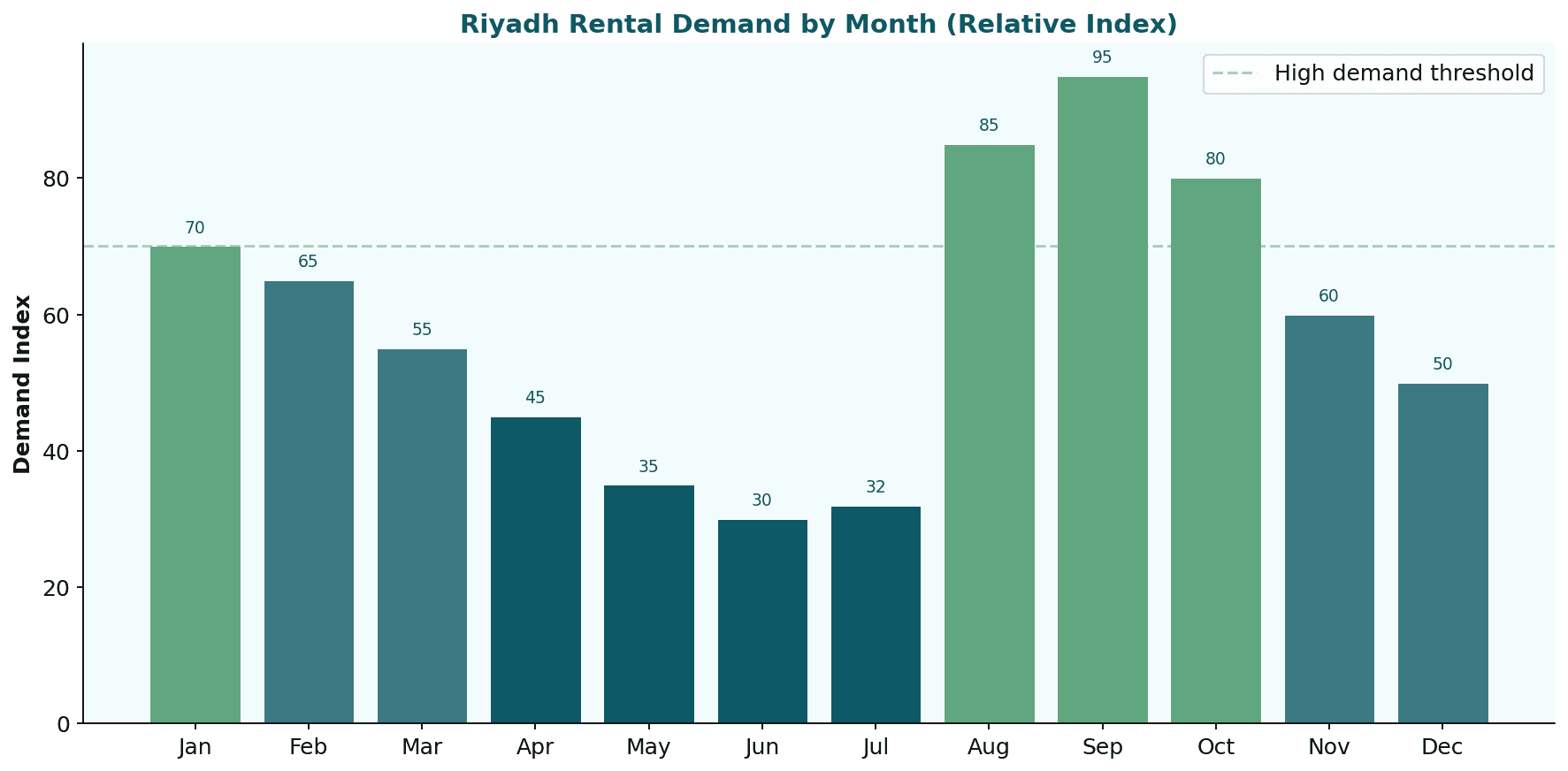
🟢 May–Jul: Best deals (low demand) | 🟠 Jan–Feb: Secondary peak | 🔴 Aug–Oct: Peak demand (highest competition)Riyadh's rental market isn't a flat line it has peaks and valleys that can save (or cost) you hundreds of riyals a month if you time your search right.
August through October is the busiest period. Families return from summer travel, schools restart, new corporate hires arrive, and government fiscal-year contracts kick in. Demand surges, vacancies drop, and landlords have less incentive to negotiate. If you're apartment-hunting in September, you're competing with everyone else, and the best units get snapped up within 48 hours of listing.
January and February bring a smaller secondary peak, driven by new-year job transfers and contract renewals. It's less intense than the autumn rush but still competitive in popular neighborhoods. Landlords who had units sitting vacant over the December holidays may be open to deals, but don't count on dramatic discounts.
May through July is the sweet spot for tenants. Many Saudi families travel abroad for summer, some expats leave permanently at the end of the academic year, and the punishing heat discourages all but the most motivated movers. Landlords staring at vacant units during these months are the most flexible on rent, lease terms, and even fit-out requests. If you have the luxury of choosing when to move, summer is when your negotiating power peaks. We've seen tenants secure 10 to 15 percent below asking rents simply by signing in June rather than September.
The Rent Freeze Advantage
In September 2025, Saudi Arabia implemented one of the most significant tenant-protection measures in the region: a five-year freeze on residential rent increases for lease renewals. Here's what that means in practice.
If you sign a lease today at SAR 5,000 a month, your landlord cannot raise that rent when the lease renews not next year, not the year after, not until 2030. In a market where rents in desirable neighborhoods have been climbing seven to twelve percent annually, this is an extraordinary shield. A tenant paying SAR 5,000 today would, without the freeze, plausibly face a rent of SAR 6,500 to 7,000 by 2028. That's SAR 18,000 to 24,000 in cumulative savings over three years alone.
The strategic implication is clear: locking in a lease now, especially in neighborhoods where rents are still climbing, is one of the smartest financial moves a Riyadh renter can make. The freeze applies to renewals, so the initial rent you agree to becomes your ceiling for half a decade. Negotiate hard on that first number. Every riyal you shave off the starting rent compounds into five years of savings.
One nuance to be aware of: the freeze covers rent increases on renewal, but if you move to a new unit, the new lease is priced at market rate. This means tenants have an incentive to stay put, which further tightens vacancy in popular neighborhoods. If you find a unit you like at a fair price, commit — the musical-chairs dynamic is real.
How to Actually Pay Rent in Riyadh
Here's the part of Riyadh renting that catches newcomers off guard: the payment structure. Unlike cities where you pay monthly, approximately 70 percent of Riyadh landlords require six to twelve months of rent upfront. That means signing a lease on a SAR 5,000-per-month apartment can require handing over SAR 30,000 to 60,000 on day one. For a family renting a villa at SAR 15,000 a month, the upfront bill can hit SAR 180,000 a figure that represents a serious chunk of anyone's savings.
This isn't a quirk; it's the dominant market structure, and it creates a real barrier to entry. Young professionals, new arrivals, and families without deep savings often find themselves locked out of neighborhoods they can otherwise afford on a monthly basis. The math works month-to-month, but the lump-sum entry doesn't.
This is where Ejari's Rent Now, Pay Later (RNPL) solution changes the equation. Instead of draining your savings or maxing out credit to cover a year's rent upfront, Ejari pays the landlord on your behalf and lets you repay in manageable monthly installments. You get the lease you want in the neighborhood you want without the cash-flow shock. The landlord gets their lump sum. You keep your savings intact.
It's a structural fix for a structural problem. And in a market where timing matters (remember those seasonal patterns and the rent-freeze window), having access to RNPL means you can act on a good deal when you find it, instead of watching it slip away while you scramble to assemble cash.
Frequently Asked Questions
Is the average rent in Riyadh expensive in 2026? Riyadh rents vary dramatically by neighborhood and property type. Studio apartments start at SAR 1,500 per month in southern districts and reach SAR 2,500 in central areas. One-bedroom apartments range from SAR 2,000 to 4,500, two-bedrooms from SAR 2,500 to 10,000-plus, and villas from SAR 10,000 to over SAR 30,000. The citywide average for a two-bedroom apartment sits around SAR 4,000 to 5,000 per month, though this figure masks significant neighborhood-level variation.
Which is the cheapest area to rent in Riyadh? Al Shifa, Al Naseem, and parts of southern and western Riyadh offer the lowest rents, with two-bedroom apartments starting at SAR 1,500 to 2,000 per month. These neighborhoods provide functional housing, established commercial infrastructure, and improving metro connectivity. For tenants willing to live in the emerging northern suburbs, Al Arid and Al Narjis also offer competitive rents — SAR 3,000 to 4,000 for two-bedrooms — with significantly newer building stock.
Does the Saudi rent freeze apply to new leases? The five-year rent freeze that took effect in September 2025 applies to lease renewals, not initial lease pricing. Your first lease is negotiated at market rate, but once signed, the landlord cannot increase rent upon renewal for five years. This makes the initial negotiation critically important — the rate you lock in today is your ceiling through 2030.
Can I pay rent monthly in Riyadh? Most Riyadh landlords require six to twelve months of rent paid upfront, with approximately 70 percent of contracts structured this way. Monthly payment is rare in the traditional market. However, services like Ejari's Rent Now, Pay Later (RNPL) allow tenants to convert the lump-sum requirement into monthly installments, making the upfront cost manageable without changing the landlord's preferred payment structure.
Which Riyadh neighborhoods are best for expat families? Expat families with corporate housing packages typically gravitate toward compound living in the Diplomatic Quarter, Al Malqa, or Hittin, where SAR 15,000 to 35,000 per month buys a self-contained lifestyle with pools, gyms, and international community. Families on more moderate budgets find excellent value in Al Yasmin and Al Narjis, where newer apartments with family-friendly amenities rent for SAR 4,000 to 6,000. Proximity to international schools — concentrated in the northern corridor — is usually the deciding factor.
Ready to find your next home in Riyadh and pay for it on your terms? Explore listings and Ejari's Rent Now, Pay Later option at ejari.sa.