The Riyadh Rent Freeze: What It Means for Tenants
The Riyadh Rent Freeze: What It Means for Tenants
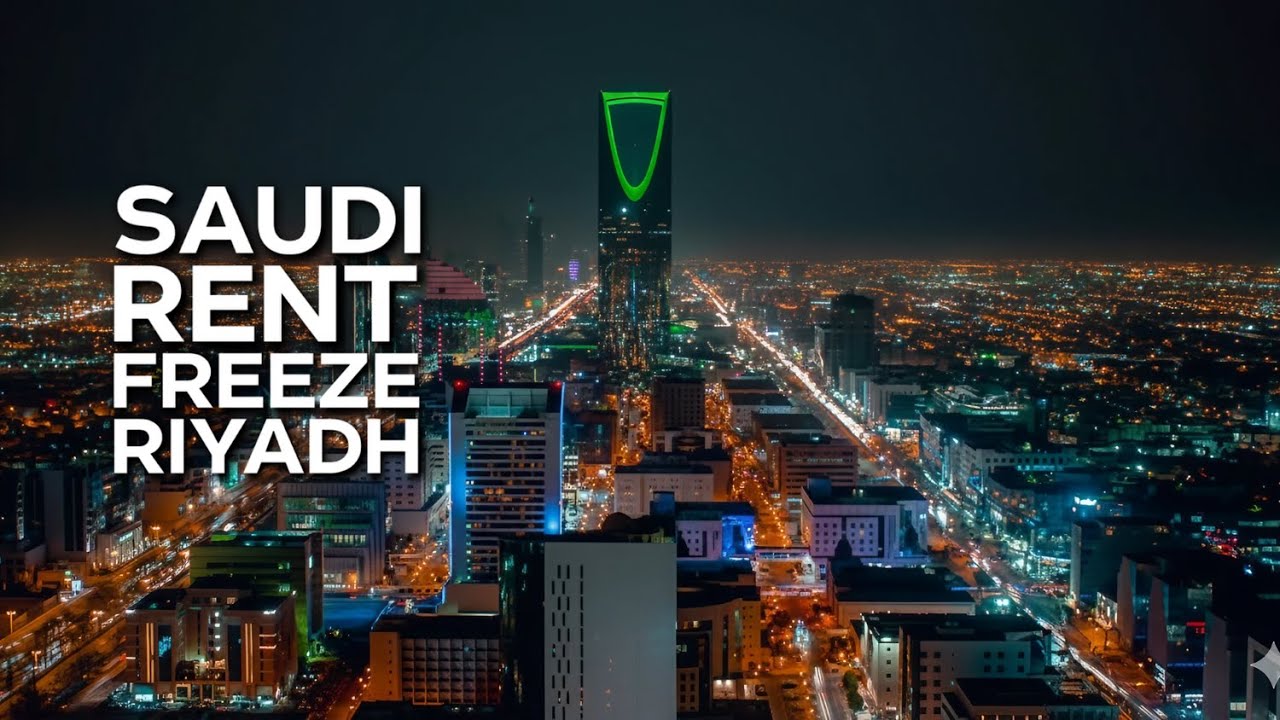
If you rent in Riyadh, three things shifted in your favour in 2025:
Your rent cannot be raised between now and 2030. Not at renewal. Not through a contract clause. Not at all.
Your landlord must give you 365 days of written notice if they decide not to renew. A full year, not 30 days.
Any rent increase above your current rate is not legally enforceable. You are not required to pay it, even if it appears on a renewal letter.
That's the one-paragraph version. This guide walks through each one — what it covers, where it stops, and exactly what to do if a landlord pretends the new rules don't exist. For the neutral overview, see The Riyadh Rent Freeze: What It Is and How It Works.
Your Rent Is Capped Until 2030 — Here's What That Actually Means
The September 2025 royal decree froze rental rate increases inside Riyadh's urban boundaries for five years. For tenants, that translates to one clean line: the rate you signed is the rate you keep, through to 2030.
Some specifics worth knowing:
It covers existing leases. If you signed in 2023, 2024, or 2025, your renewal can't come with a rate increase. If your landlord floats one, it isn't legally enforceable.
It covers new leases you're signing now. The rate you agree to this month locks in for the rest of your lease and every renewal until the freeze expires.
It doesn't cover utilities, service charges, or building maintenance. If your building's management company adjusts those, the freeze doesn't apply. Check your lease for how service charges are defined.
It doesn't reduce the rent you already signed. If you locked in at a 2025 peak rate, you locked in at that rate. The freeze holds it there; it doesn't roll it back.
The honest caveat: the freeze is neutral on timing. A tenant who signed at the peak of the spike is stuck at the peak. A tenant signing now locks in at today's rate, which has already absorbed the 2023–2025 rise.
The 365-Day Notice Rule Is Your Real Insurance
The December 2025 REGA regulation is the quieter half of the reform and, if anything, the more useful one day-to-day.
Under the new rule, a landlord who decides not to renew your lease must give you 365 days of written notice — a full year before the lease ends. That rebalances every renewal conversation in your favour.
What this means in practice:
If your landlord doesn't renew, you have a year to plan. A year to find a place, compare neighbourhoods, line up financing, negotiate the move on your timeline instead of theirs.
If your landlord wants you out for any reason — sale, redevelopment, family use — the clock starts at year minus 365 days, not month minus 30. Landlords who want the unit back are going to find renewal easier than eviction.
If the notice comes and you decide you want to stay, you still have leverage. Negotiating from a 12-month runway is structurally different from negotiating from two months.
What to Do If Your Landlord Tries to Raise Your Rent Anyway
Not every landlord will honour the freeze gracefully. Some will send renewal notices with increases baked in, hoping the tenant doesn't know the rule. Here's the straight answer:
Any rate increase above your current rate is not legally enforceable. You do not have to pay it. You do not have to negotiate it. The freeze overrides contract language that contradicts it.
If the landlord pushes, escalate to REGA. The Real Estate General Authority is the enforcing authority. Complaints can be filed through REGA's official channels, and unlawful increases are reversed through that process.
Keep a paper trail. Save the WhatsApp message, the renewal notice, any email or written communication about the increase. If it gets escalated, documentation is what settles it.
Your Ejar contract is your proof of the original rate. The lease registered on the government Ejar platform is what REGA will reference. That's the legal record of what you owe.
No polite fiction about this: some landlords will try. Knowing the rule is how you don't lose to it.
The Negotiation Leverage You Just Gained
Even if your landlord is honouring the freeze cleanly, the regulation shifts the broader relationship in ways worth using.
Renewal discussions start from "you're staying" as the default. The 365-day notice rule means your landlord can't casually replace you. Assuming you want to stay, the lease continues at your current rate. You negotiate improvements — not survival.
You can ask for things that were previously unthinkable. Maintenance upgrades, appliance replacement, small renovations — landlords who value predictable occupancy over potential churn are more flexible now.
You have time to shop around. If you do decide to move, you can line up monthly rent financing, compare neighbourhoods properly, and negotiate with new landlords from a position of having options instead of urgency.
You're not a one-year tenant anymore. In a frozen market, a good tenant is a five-year asset. Landlords who understand this will treat you accordingly.
When Moving Still Makes Sense
The freeze is protection, not a prison. Moving still makes sense in specific cases:
Your current place doesn't fit anymore. A growing family, a new job across the city, a neighbourhood that doesn't match your life — the freeze doesn't fix those.
The rate you signed at was inflated. If you committed at a 2025 peak and a comparable unit is now available at a lower frozen rate, moving may be worth the friction.
Your landlord is a problem. Slow on maintenance, aggressive on fees, unpleasant on communication the freeze doesn't soften any of that. Quality of the relationship matters.
In all three cases, a monthly rent platform makes the move itself easier — you don't have to liquidate savings for an annual upfront at a new place.
The Short Version
If your lease is in Riyadh, your rent is capped through 2030 and you're owed 365 days of written notice on any non-renewal. That's the law. Any landlord who says otherwise is wrong, and REGA is the referee. You negotiate renewals from strength now, not scramble.
If you decide to move anyway, that's fine — just remember the new place's rate is also frozen from signing, and a monthly rent platform takes the sting out of the transition.
Ejari is a REGA-licensed platform (#2200001825) that enables tenants to pay rent monthly while landlords receive the full year upfront. Explore how Ejari works at ejari.sa.
Frequently Asked Questions
My landlord is trying to raise my rent for 2026. Is that legal?
If your property is inside Riyadh's urban boundaries, no. Rate increases are capped until 2030. You are not legally obligated to pay any increase above your current rate.
What if I want to move during the freeze — does it follow me?
Yes, in the sense that your new rate is also capped from signing. A new lease at a new property signs at today's market rate, which itself is frozen at 2025 levels.
Does the freeze mean my landlord can't evict me?
The freeze doesn't remove a landlord's right to non-renewal or legal eviction for breach. What it does add is the 365-day notice requirement for non-renewal, so you have time to respond.
What happens if my landlord wants to sell the property?
A sale alone doesn't end your lease. The new owner inherits your contract under its existing terms, including the frozen rate. If the new owner chooses not to renew at the end of your current term, the 365-day notice rule still applies.
Does the freeze cover furnished rentals and short-term leases?
Standard residential leases — furnished and unfurnished, long-term — are covered. Short-term holiday rentals and hotel-style stays are regulated separately and may not fall under the decree.
Where do I file a complaint about a landlord violating the freeze?
Through REGA's official complaint channels. Keep your Ejar contract, written communications with your landlord, and any rate-increase notices as documentation.
If you rent in Riyadh, three things shifted in your favour in 2025:
Your rent cannot be raised between now and 2030. Not at renewal. Not through a contract clause. Not at all.
Your landlord must give you 365 days of written notice if they decide not to renew. A full year, not 30 days.
Any rent increase above your current rate is not legally enforceable. You are not required to pay it, even if it appears on a renewal letter.
That's the one-paragraph version. This guide walks through each one — what it covers, where it stops, and exactly what to do if a landlord pretends the new rules don't exist. For the neutral overview, see The Riyadh Rent Freeze: What It Is and How It Works.
Your Rent Is Capped Until 2030 — Here's What That Actually Means
The September 2025 royal decree froze rental rate increases inside Riyadh's urban boundaries for five years. For tenants, that translates to one clean line: the rate you signed is the rate you keep, through to 2030.
Some specifics worth knowing:
It covers existing leases. If you signed in 2023, 2024, or 2025, your renewal can't come with a rate increase. If your landlord floats one, it isn't legally enforceable.
It covers new leases you're signing now. The rate you agree to this month locks in for the rest of your lease and every renewal until the freeze expires.
It doesn't cover utilities, service charges, or building maintenance. If your building's management company adjusts those, the freeze doesn't apply. Check your lease for how service charges are defined.
It doesn't reduce the rent you already signed. If you locked in at a 2025 peak rate, you locked in at that rate. The freeze holds it there; it doesn't roll it back.
The honest caveat: the freeze is neutral on timing. A tenant who signed at the peak of the spike is stuck at the peak. A tenant signing now locks in at today's rate, which has already absorbed the 2023–2025 rise.
The 365-Day Notice Rule Is Your Real Insurance
The December 2025 REGA regulation is the quieter half of the reform and, if anything, the more useful one day-to-day.
Under the new rule, a landlord who decides not to renew your lease must give you 365 days of written notice — a full year before the lease ends. That rebalances every renewal conversation in your favour.
What this means in practice:
If your landlord doesn't renew, you have a year to plan. A year to find a place, compare neighbourhoods, line up financing, negotiate the move on your timeline instead of theirs.
If your landlord wants you out for any reason — sale, redevelopment, family use — the clock starts at year minus 365 days, not month minus 30. Landlords who want the unit back are going to find renewal easier than eviction.
If the notice comes and you decide you want to stay, you still have leverage. Negotiating from a 12-month runway is structurally different from negotiating from two months.
What to Do If Your Landlord Tries to Raise Your Rent Anyway
Not every landlord will honour the freeze gracefully. Some will send renewal notices with increases baked in, hoping the tenant doesn't know the rule. Here's the straight answer:
Any rate increase above your current rate is not legally enforceable. You do not have to pay it. You do not have to negotiate it. The freeze overrides contract language that contradicts it.
If the landlord pushes, escalate to REGA. The Real Estate General Authority is the enforcing authority. Complaints can be filed through REGA's official channels, and unlawful increases are reversed through that process.
Keep a paper trail. Save the WhatsApp message, the renewal notice, any email or written communication about the increase. If it gets escalated, documentation is what settles it.
Your Ejar contract is your proof of the original rate. The lease registered on the government Ejar platform is what REGA will reference. That's the legal record of what you owe.
No polite fiction about this: some landlords will try. Knowing the rule is how you don't lose to it.
The Negotiation Leverage You Just Gained
Even if your landlord is honouring the freeze cleanly, the regulation shifts the broader relationship in ways worth using.
Renewal discussions start from "you're staying" as the default. The 365-day notice rule means your landlord can't casually replace you. Assuming you want to stay, the lease continues at your current rate. You negotiate improvements — not survival.
You can ask for things that were previously unthinkable. Maintenance upgrades, appliance replacement, small renovations — landlords who value predictable occupancy over potential churn are more flexible now.
You have time to shop around. If you do decide to move, you can line up monthly rent financing, compare neighbourhoods properly, and negotiate with new landlords from a position of having options instead of urgency.
You're not a one-year tenant anymore. In a frozen market, a good tenant is a five-year asset. Landlords who understand this will treat you accordingly.
When Moving Still Makes Sense
The freeze is protection, not a prison. Moving still makes sense in specific cases:
Your current place doesn't fit anymore. A growing family, a new job across the city, a neighbourhood that doesn't match your life — the freeze doesn't fix those.
The rate you signed at was inflated. If you committed at a 2025 peak and a comparable unit is now available at a lower frozen rate, moving may be worth the friction.
Your landlord is a problem. Slow on maintenance, aggressive on fees, unpleasant on communication the freeze doesn't soften any of that. Quality of the relationship matters.
In all three cases, a monthly rent platform makes the move itself easier — you don't have to liquidate savings for an annual upfront at a new place.
The Short Version
If your lease is in Riyadh, your rent is capped through 2030 and you're owed 365 days of written notice on any non-renewal. That's the law. Any landlord who says otherwise is wrong, and REGA is the referee. You negotiate renewals from strength now, not scramble.
If you decide to move anyway, that's fine — just remember the new place's rate is also frozen from signing, and a monthly rent platform takes the sting out of the transition.
Ejari is a REGA-licensed platform (#2200001825) that enables tenants to pay rent monthly while landlords receive the full year upfront. Explore how Ejari works at ejari.sa.
Frequently Asked Questions
My landlord is trying to raise my rent for 2026. Is that legal?
If your property is inside Riyadh's urban boundaries, no. Rate increases are capped until 2030. You are not legally obligated to pay any increase above your current rate.
What if I want to move during the freeze — does it follow me?
Yes, in the sense that your new rate is also capped from signing. A new lease at a new property signs at today's market rate, which itself is frozen at 2025 levels.
Does the freeze mean my landlord can't evict me?
The freeze doesn't remove a landlord's right to non-renewal or legal eviction for breach. What it does add is the 365-day notice requirement for non-renewal, so you have time to respond.
What happens if my landlord wants to sell the property?
A sale alone doesn't end your lease. The new owner inherits your contract under its existing terms, including the frozen rate. If the new owner chooses not to renew at the end of your current term, the 365-day notice rule still applies.
Does the freeze cover furnished rentals and short-term leases?
Standard residential leases — furnished and unfurnished, long-term — are covered. Short-term holiday rentals and hotel-style stays are regulated separately and may not fall under the decree.
Where do I file a complaint about a landlord violating the freeze?
Through REGA's official complaint channels. Keep your Ejar contract, written communications with your landlord, and any rate-increase notices as documentation.