The Brain-Twist: Renting Can Be Rational (Not Just Convenient)
For decades, the logic seemed airtight: buy a home, build equity, retire rich. Parents point to houses they bought in the 1970s for $30,000 that are "now worth a million." But here's what those stories skip: if that same $30,000 had been invested in the S&P 500, it could have grown to over $9 million. Ownership isn't always the best investment. Sometimes, the smartest move is renting and letting your money work harder elsewhere.
And the data backs it up. Across the United States, the number of millionaire renters tripled between 2019 and 2023. In Berlin, nearly 85% of residents rent. In Hong Kong, one of the world's most expensive property markets, luxury rental demand is at record highs. In Singapore, London, and Los Angeles, high net worth individuals are choosing flexibility over fixed assets.
This isn't a trend driven by necessity. It's a strategy driven by optionality.
Even the ultra wealthy aren't immune to the downsides of ownership. Michael Jordan has been trying to sell his $14.9 million Chicago mansion for over 12 years. A reminder that real estate isn't always the liquid, appreciating asset people assume it to be. When one of the most famous athletes on the planet can't offload a property, it reframes the conversation about what "smart money" actually looks like.
The financial case for renting
The conventional wisdom is that rent is "money thrown away." The math tells a different story.
Opportunity cost. Capital locked in a property can't be deployed elsewhere. If a buyer puts SAR 300,000 as a down payment on a home, that capital is illiquid, tied to a single asset in a single market. Invested in a diversified portfolio, the same amount could generate returns that exceed the appreciation of the property.
Transaction costs. Buying and selling real estate is expensive. Brokerage fees, legal fees, the Real Estate Transaction Tax (RETT), and moving costs can consume 5 to 10% of a property's value. A renter who moves every 3 to 5 years avoids these costs entirely.
Maintenance burden. Homeowners are responsible for repairs, HOA fees, and ongoing upkeep. A broken AC unit in July isn't just an inconvenience. It's a SAR 5,000 to 15,000 bill. Renters pass that cost to the landlord.
Flexibility premium. In a world where career opportunities, family needs, and lifestyle preferences change rapidly, the ability to move without selling a property is worth real money. The millionaires who rent aren't losing. They're buying optionality.
The rental vs. ownership decision is asset allocation, not nostalgia. And in several markets today, owning costs over $1,000 more per month than renting a comparable home. That spread isn't "wasted rent." It's investable cash flow.
None of this means buying is wrong. It means renting can be the rational choice, not just the affordable one.
When buying does make sense
Ownership has real advantages, and for certain profiles it remains the stronger financial move.
Long term stability. If you're settled in one city for 10+ years, buying eliminates rent escalation risk and locks in your housing cost. In a market like Riyadh where rents have climbed 20 to 25% in two years, that certainty has real value.
Equity accumulation. Monthly mortgage payments build ownership in an asset. Over a 15 to 20 year horizon, that equity can become a significant part of your net worth, especially if the property sits in a high growth corridor.
Generational wealth. In Saudi culture, property is often the primary vehicle for intergenerational transfer. A family home carries financial and emotional weight that renting doesn't replicate.
Favourable financing. With Saudi mortgage products improving and government backed homeownership programmes expanding under Vision 2030, the cost of entry is lower than it was five years ago for qualifying buyers.
The honest answer: neither renting nor buying is universally better. What's changed is that renting is no longer the "losing" option. It's a legitimate financial strategy.
The buy to rent ratio: a smarter way to decide
Rather than debating rent vs. buy in the abstract, there's a data driven framework that cuts through the noise: the buy to rent ratio. How it works: Take the median sale price of an apartment in a given neighbourhood and divide it by the median annual rent for a similar unit. The result tells you how many years of rent it would take to equal the purchase price.
Ratio | What it means |
|---|---|
15 years or less | Buying is financially attractive |
15 to 20 years | Grey zone: depends on your tenure, mortgage rate, and liquidity |
20 years or more | Renting is the more efficient use of capital |
This isn't a rough guess. Economists Sommer et al. (2013) and Gallin (2008) have shown empirically that the buy to rent ratio is a valid long run indicator of housing market equilibrium.
Buy zone (ratio under 15):
Neighbourhood | Buy to Rent Ratio | Verdict |
|---|---|---|
Al Hamra | ~9.6 years | Strong buy signal |
Al Ghadir | ~15 years | Attractive to buy |
Al Muruj | ~15 years | Attractive to buy |
Al Saadah | ~15 years | Attractive to buy |
These tend to be southern and western Riyadh districts where sale prices haven't been inflated by speculative demand. If you plan to stay long term and can secure favourable financing, these areas offer genuine value.
Grey zone (ratio 15 to 20):
Neighbourhood | Buy to Rent Ratio | Verdict |
|---|---|---|
Tuwaiq | ~15.7 years | Depends on your situation |
Al Arid | ~16 years | Depends on your situation |
Al Malqa | ~16 years | Depends on your situation |
In the grey zone, your personal circumstances matter more than the market. How long will you stay? What's your mortgage rate? Could that down payment earn more elsewhere?
Rent zone (ratio over 20):
Neighbourhood | Buy to Rent Ratio | Verdict |
|---|---|---|
Al Aqiq | ~34 years | Renting is clearly better |
Al Yasmin | Elevated | Rent favoured |
Al Shuhada | Elevated | Rent favoured |
These are premium northern Riyadh neighbourhoods where sale prices have run far ahead of rental fundamentals. If you want to live in Al Aqiq, renting and investing the difference is financially superior to buying at current prices.
The key insight: The neighbourhood you choose in Riyadh may matter more for your long term finances than the interest rate you negotiate on your mortgage. A blanket "buy when you can" approach ignores massive variation across the city.
Now let's bring this closer to home.
In Saudi Arabia, the challenge isn't only about whether to buy or rent. It's about how rent is paid. And that distinction changes everything.
Homeownership targets. Vision 2030 aims to raise homeownership to 70%. That's an ambitious goal, and real progress has been made. The rate has climbed from 47% in 2016 to over 63% by 2025. But that still leaves more than a third of the population renting. And in cities like Riyadh, where rapid population growth is outpacing housing construction, the rental market isn't shrinking. It's expanding.
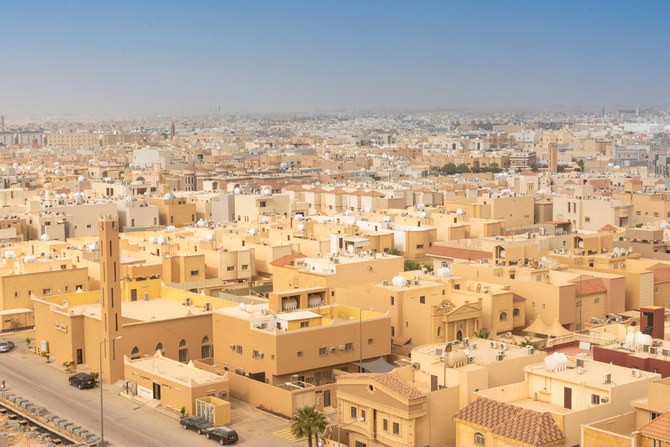
Riyadh's rent trajectory. Average rents in the capital have increased 20 to 25% over the past two years. Some northern neighbourhoods have seen spikes exceeding 30%. For many young Saudis, expats, and families, buying simply isn't an option right now, and it may not be the best option even if it were.
Demographic shift. Saudi Arabia's population skews young. The median age is roughly 31. Young professionals are mobile, career focused, and less likely to commit to a 20 year mortgage than previous generations. The global pattern of younger cohorts preferring flexibility over fixed assets is playing out in the Kingdom in real time.
The real problem: not whether to rent, but how
Here's where Saudi Arabia's rental market diverges from global norms.
In most developed markets, renting means paying monthly. First month, last month, maybe a deposit. The financial burden is distributed across the year, aligning with how people earn.
In Saudi Arabia, nearly 70% of rental contracts require six months or a full year paid upfront. That model, a relic of a smaller, less mobile economy, creates a liquidity crisis for tenants every time they sign or renew a lease.
A tenant earning SAR 15,000 per month facing SAR 90,000 in annual rent needs six months of gross income available in a single transaction. That's before furniture, school fees, and the cost of actually living.
The irony: the same financial flexibility that makes renting attractive globally is undermined in Saudi by the upfront payment structure. Millionaires rent for optionality. Saudi tenants are forced to sacrifice that optionality before they even move in.
Rent vs. buy: the Saudi hard numbers
Option | Annual Cost Estimate | What's Included |
|---|---|---|
Rent (Annual) | SAR 45,000 to 100,000 | Monthly rent, utilities, renewal fees, no maintenance burden |
Buy (Mortgage + Costs) | ~SAR 1,800,000 total | Down payment (20% ≈ SAR 300k) + mortgage + RETT + maintenance + HOA fees |
Hidden costs of buying:
HOA fees for compounds and managed communities
Maintenance and repairs (AC, plumbing, structural)
Brokerage and legal fees at purchase and sale
RETT (Real Estate Transaction Tax) on transfer
Illiquidity: selling a property in Saudi can take months (just ask Michael Jordan)
What renting preserves:
Monthly cash flow
Geographic and career mobility
Capital available for investment or emergency
No exposure to property value fluctuations
What this means for the market
The global shift toward renting, including among the wealthy, signals that housing is being rethought as a service, not just an asset.
Saudi Arabia's rental market is already enormous and growing. The challenge isn't convincing people to rent. Millions already do. The challenge is modernising how rent is paid so that the financial benefits of renting (flexibility, liquidity, lower commitment) aren't wiped out by an outdated payment structure.
The markets that get this right, where renting is both accessible and financially rational, tend to be the ones that attract talent, support mobility, and sustain economic growth. Saudi Arabia, with its Vision 2030 ambitions, its young population, and its booming cities, is positioned to lead that shift.
The short version
Renting isn't a fallback. In markets around the world, including Saudi Arabia, it's increasingly a deliberate, financially rational choice. The question isn't whether renting makes sense. It's whether the rental system is designed to let people benefit from it.
Globally, the answer is yes: monthly payments, flexible terms, low commitment. In Saudi, the system is catching up, and the shift from annual upfront payments to monthly models is the single biggest unlock for making renting work the way modern life demands.
Frequently Asked Questions
Is renting better than buying in Saudi Arabia? It depends on the neighbourhood and your situation. In districts like Al Hamra (buy to rent ratio of ~9.6), buying is financially attractive. In premium areas like Al Aqiq (~34), renting and investing the difference wins. Use the buy to rent ratio as your starting point, then factor in your time horizon, mortgage rate, and liquidity needs.
What is the buy to rent ratio and how do I use it? Divide the median sale price of an apartment by the median annual rent for a similar unit. If the result is 15 or below, buying is attractive. Between 15 and 20 is a grey zone. Above 20, renting is the more efficient use of capital. This metric is backed by peer reviewed housing economics research.
Why do landlords in Saudi Arabia require annual rent upfront? It's a legacy practice from when the rental market was smaller and less regulated. Landlords used upfront collection to reduce non payment risk. As the market matures and platforms introduce guaranteed payment models, this norm is shifting toward more flexible structures.
How much does it cost to rent in Riyadh in 2026? SAR 60,000 to 120,000 per year for a 2 to 3 bedroom flat. Northern Riyadh (Al Malqa, Hittin, Al Narjis) sits at the higher end. Central Riyadh (Al Olaya, Al Wurud) ranges SAR 60,000 to 100,000. South and east are more affordable but with longer commutes.
Can I pay rent monthly in Saudi Arabia? Yes. Platforms now exist that pay landlords the full annual rent upfront while allowing tenants to repay monthly. This removes the lump sum barrier without changing the landlord's experience.
Ejari is a REGA licensed platform that enables tenants to pay rent monthly while landlords receive the full year upfront. Explore how Ejari is reshaping the Saudi rental market at ejari.sa.